Coriander Oil for Hair: Warm Spice Scalp and Shine Routines
Coriander seed oil has a quiet confidence about it. Where louder botanicals like peppermint or rosemary announce themselves boldly, coriander brings something subtler: a warm, faintly sweet spice note and a linalool-rich profile that makes it a pleasure to work into hair and scalp rituals. If you have been overlooking this seed-pressed gem, these routines are a good reason to bring it to the front of your shelf.
This guide walks you through practical, step-by-step coriander oil hair routines, from a pre-shampoo scalp soak to a finishing gloss rinse. You will find the materials you need, numbered instructions, tips on what to avoid, and honest notes on what you can reasonably expect.
Why Coriander Seed Oil Belongs in a Hair Routine
Coriander essential oil is steam-distilled from the dried, ripe seeds of Coriandrum sativum. Its dominant constituent is linalool, a naturally occurring terpene alcohol that also appears in lavender and bergamot. This chemical profile gives coriander oil a softer, less camphoraceous quality than many spice-family oils, which means it is generally more compatible with sensitive scalp skin when properly diluted.
From an aromatic standpoint, coriander seed oil adds a warm, woody-citrus dimension that layers beautifully with carrier oils. It is a pleasing addition to a blending toolkit. For more on its broader aromatic uses, see our complete guide to coriander essential oil uses.
People who incorporate coriander seed oil into their scalp routines often report a pleasant warming sensation, a noticeable improvement in how the scalp feels after a soak, and a light, lingering fragrance that persists even after rinsing. These are experiential observations. They are not medical outcomes.
Before You Begin: Safety and Dilution Essentials
Essential oils are highly concentrated. Coriander essential oil must always be diluted in a carrier oil before skin or scalp contact. Applying it undiluted is a common mistake that can cause irritation.
- Standard scalp dilution: 1 to 2 percent. That works out to 6 to 12 drops of essential oil per 1 fluid ounce (30 ml) of carrier oil.
- Patch test first: Apply your diluted blend to the inside of your wrist or behind your ear. Wait 24 hours. If you notice redness, itching, or discomfort, do not proceed.
- Avoid contact with eyes. If contact occurs, flush with plain carrier oil, then rinse with water.
- Pregnancy and nursing: Consult a qualified healthcare provider before using essential oils during pregnancy or while breastfeeding.
- Children: Consult a qualified healthcare provider before using essential oils on children.
- Photosensitivity note: Coriander essential oil is not considered a sensitizing oil, but always patch test with any new blend.
A note on sourcing: The quality of your coriander oil matters considerably. Look for suppliers who provide GC/MS (gas chromatography/mass spectrometry) test results and clearly state the country of origin. Russian and Eastern European coriander seed oils tend to have a higher linalool content, which contributes to the sweeter aromatic profile valued in cosmetic and hair applications.
Routine 1: Pre-Shampoo Warm Spice Scalp Soak
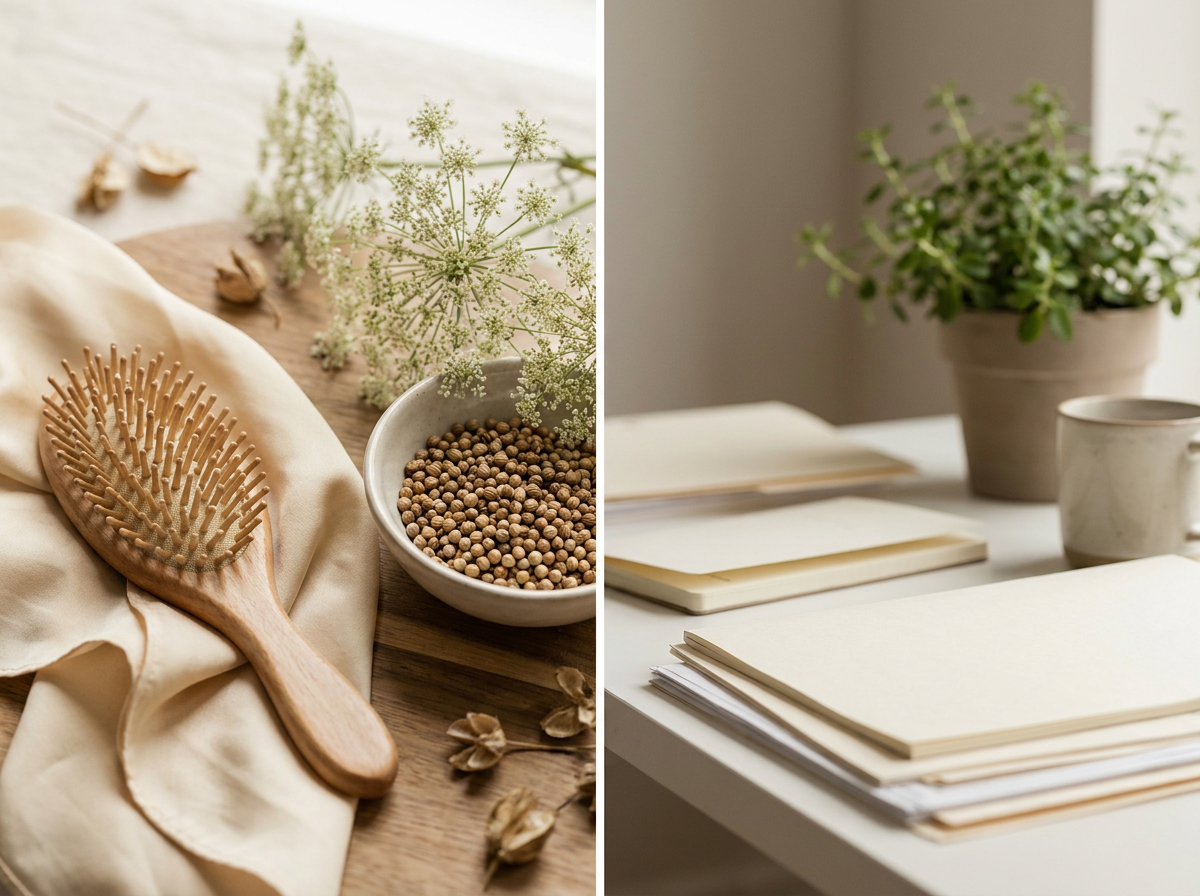
This is the foundational coriander oil hair routine. Done once or twice a week before washing, it works the blend into the scalp and hair lengths for a period before rinsing out thoroughly. Many people find that regular pre-shampoo soaks may help their scalp feel more balanced and their hair appear more supple over time.
Materials Needed
- 1 oz (30 ml) jojoba oil (a good match for scalp use, as its structure closely resembles sebum)
- 10 drops coriander essential oil (yields a 1.7 percent dilution)
- Optional: 5 drops sweet orange or cedarwood essential oil for a complementary aromatic layer
- Small dark glass bottle or bowl for mixing
- Fine-tooth applicator bottle or your fingertips
- Shower cap or warm towel
- Your regular shampoo
Step-by-Step Instructions
- Blend your oil. Combine the jojoba oil and coriander essential oil (plus any optional additions) in your glass bottle. Replace the cap and roll the bottle gently between your palms for 30 seconds to combine. Do not shake vigorously, as this can introduce air bubbles.
- Section your hair. Working with dry or slightly damp hair, divide your hair into four sections using clips. This gives you clear access to the scalp and prevents uneven application.
- Apply to the scalp. Using the applicator bottle tip or your fingertips, apply the blend directly to the scalp in small amounts along each parting. Start at the crown and work outward. Use 1 to 2 teaspoons of the blend for a full scalp application, adjusting for hair thickness.
- Massage gently. With the pads of your fingers (not your nails), massage the scalp in small circular motions for 3 to 5 minutes. Work through all four sections. This encourages the blend to contact the scalp fully and is one of the more enjoyable parts of the ritual.
- Apply any remaining blend to lengths. If you have dry or coarse ends, smooth any leftover oil through the mid-lengths and ends of your hair. Avoid the roots if your hair tends toward oiliness.
- Wrap and wait. Cover your hair with a shower cap or wrap loosely with a warm towel. Leave the blend in place for 20 to 45 minutes. Some people prefer to do this while they do other parts of their routine.
- Shampoo thoroughly. Rinse with warm water first, then shampoo twice if needed to remove the oil fully. Residual oil left on the scalp can make hair appear greasy and may attract buildup.
- Condition as usual. Follow with your standard conditioner on the lengths and ends, avoiding the scalp.
Tips and Common Mistakes
- Do not skip the double shampoo. One round often leaves oil behind, especially at the roots.
- Do not overheat the towel. A slightly warm, damp towel is fine. Avoid applying heat directly to essential oil blends.
- Do not increase the essential oil ratio thinking it will improve results. Higher concentrations increase the risk of scalp irritation without adding benefit.
What to Expect
After the first few uses, people commonly report that the scalp feels cleaner and less tight after washing. Hair often has a noticeable softness and carries a faint warm-spice scent even after rinsing. Consistent use over several weeks may support a more balanced scalp feel overall, though individual results vary.
Routine 2: Shine-Boosting Coriander Oil Leave-In Gloss
This is a lighter, rinse-free approach suited to finishing rather than soaking. It works well on wash days as a final step, or as a mid-week refresh for dry or frizzy lengths.
Materials Needed
- 1 tablespoon argan oil (lightweight, high in oleic acid, excellent for surface shine)
- 3 drops coriander essential oil
- 1 drop Roman chamomile or ylang ylang essential oil (optional, for aromatic depth)
- Small dropper bottle or the palm of your hand
Step-by-Step Instructions
- Mix your gloss blend. Combine the argan oil and essential oils in a dropper bottle, or simply add them to your palm and swirl together with a fingertip.
- Apply to damp hair after washing. On freshly washed, towel-dried hair, dispense 2 to 4 drops of the blend into your palms. Rub your palms together lightly to warm the oil.
- Smooth through mid-lengths and ends. Work the blend through the lower two-thirds of your hair, pressing it gently into the surface of each section. Avoid the roots to keep volume at the crown.
- Style as usual. Proceed with your normal drying or styling routine. The blend works under a diffuser, during air-drying, or before using a wide-tooth comb.
Tips and Common Mistakes
- Less is genuinely more here. Start with 2 drops in your palm. Fine or thin hair can look weighed down with even half a teaspoon of argan oil.
- Do not apply to the scalp as a leave-in. This blend is for lengths only and will cause buildup if applied to the scalp and not rinsed.
- Store the blended bottle away from heat and direct sunlight. A bathroom cabinet or a cool drawer is ideal.
What to Expect
Users often notice that hair looks visibly smoother and catches light more evenly after using a lightweight gloss blend. The coriander seed oil aromatic note is subtle enough that it will not overpower your shampoo or perfume. It may lend a soft warmth to the overall scent profile of your hair.
Building a Weekly Coriander Oil Hair Routine
Consistency tends to produce more noticeable results than occasional use. Here is a simple framework for integrating both routines into your week:
| Day | Routine | Time Required |
|---|---|---|
| Sunday | Pre-shampoo warm spice scalp soak | 45 to 60 minutes (including soak time) |
| Sunday (post-wash) | Shine gloss applied to damp lengths | 2 minutes |
| Wednesday | Shine gloss on mid-lengths as a refresh (no wash required) | 2 minutes |
| Thursday or Friday | Optional second wash-day gloss application | 2 minutes |
Adjust the schedule to fit your washing frequency. Those who wash daily will want to apply the scalp soak no more than twice a week, as the scalp benefits from some natural oil production in between.
Blending Coriander Seed Oil with Other Botanicals
Coriander seed oil has a cooperative aromatic character. It does not dominate a blend, which makes it easy to pair. For hair routines specifically, consider these combinations:
- Coriander plus cedarwood: A grounding, woody pairing that works well in scalp soaks. Cedarwood atlas is particularly well-regarded in scalp-focused blends.
- Coriander plus sweet orange: A bright, uplifting combination. The citrus note in orange complements the faint citrus undercurrent in coriander seed oil beautifully.
- Coriander plus geranium: A softer, floral-spice blend suited to a gloss routine for those who prefer a more feminine aromatic profile.
- Coriander plus clary sage: A herbaceous, complex combination. This pairs well in scalp soaks for people who enjoy earthy, green scent profiles.
If blending and fragrance layering interest you beyond hair care, our article on DIY coriander perfume and cologne recipes explores the aromatic side of this oil in much more depth.
Choosing Quality Coriander Essential Oil for Hair Use
Not all coriander essential oils are equal. Some products on the market are diluted in carrier oil before bottling and labeled without clear disclosure. Others may be adulterated with synthetic linalool. For hair and scalp routines, you want a pure, unadulterated steam-distilled product.
Key things to look for when shopping:
- Latin name on the label: Coriandrum sativum, seed (not leaf). Leaf oil has a very different chemical profile and is not suited to these routines.
- GC/MS report availability: Reputable suppliers make these available on request or on their website.
- Country of origin stated: Russia, Ukraine, and Hungary are among the major producing regions for high-linalool coriander seed oil.
- Dark glass bottle: Essential oils degrade in plastic and clear glass.
- No added fragrance or fillers: The ingredient list should read only Coriandrum sativum seed oil.
For a broader look at how to evaluate and use this oil across different applications, visit our coriander oil for skin blending guide, which covers the linalool profile in more detail.
A Note on Realistic Expectations
Coriander seed oil for scalp and hair routines is a cosmetic practice. It is a pleasant, aromatic addition to a well-considered hair care ritual. People who use it consistently often report softer hair, a more comfortable scalp feel, and an enjoyable sensory experience during their routine.
These routines are not substitutes for professional guidance if you are experiencing persistent scalp concerns. Always consult a qualified healthcare provider for any ongoing scalp or hair issues.
What coriander oil genuinely excels at is this: making a simple, necessary part of your week feel considered and warm. The spice-seed scent, the silky carrier oils, the quiet ritual of the massage. That is where this oil earns its place in your routine.